Urban Financing Partnership Facility Annual Report 2024
The Urban Financing Partnership Facility is dedicated to mitigating climate change and disaster risks for select cities in Asia and the Pacific.

Listen to the article
The Urban Financing Partnership Facility (UFPF) was established in November 2009 to provide investment cofinancing and technical assistance (TA) to urban environment infrastructure that benefits poor people. The facility aims to raise and utilize development partner funds for investment cofinancing in urban environmental infrastructure projects, and support a wide range of TA projects to help lay the groundwork for such projects.
The UFPF has four active trust funds: the ASEAN Australia Smart Cities Trust Fund (AASCTF), the Cities Development Initiative for Asia Trust Fund, the Urban Climate Change Resilience Trust Fund, and the Urban Resilience Trust Fund. The Urban Environmental Infrastructure Fund closed in 2024.
Under the AACSTF, ADB provided support to Indonesia’s Nusantara National Capital Authority by creating an enabling environment for private sector investment through a spatial plan review that considered push and pull factors and sustainability aspects, and an integrated data platform for potential investments.
By 2024, the Cities Development Initiative for Asia Trust Fund had commissioned 28 project preparatory studies (PPS) since its establishment as an ADB trust fund in 2018. Of the 28 PPS, 21 have been linked to $1.3 billion in investments, of which 52% are financed by ADB.
The Urban Climate Change Resilience Trust Fund (UCCRTF) is winding up its activities. In its 10 years of operation, the fund has supported 7.8 million people (2.4 million direct and 5.3 million indirect beneficiaries) to better adapt to the effects of climate change through knowledge, better planning, and the development of climate resilience infrastructure in the eight countries of its operation: Bangladesh, India, Indonesia, Pakistan, Nepal, Myanmar*, the Philippines, and Viet Nam. UCCRTF’s support has been linked to $10.6 billion of approved downstream investments comprising $5.8 billion in approved ADB loans, $2.3 billion in cofinance, and $2.6 billion in government counterpart funding.
The Urban Resilience Trust Fund (URTF), which succeeds the UCCRTF, was officially approved by ADB as a trust fund under the Urban Financing Partnership Facility umbrella in March 2023. It is supported by the Government of the United Kingdom’s Foreign, Commonwealth and Development Office with a committed funding of $82.2 million (£68.5 million). Building on the lessons learned from the UCCRTF, the URTF aims to (i) build the capacity of cities by helping national and subnational urban agencies, communities, and the private sector to integrate climate resilience into their policies; and (ii) develop and effectively implement a pipeline of resilience projects through public or private investments.
*Effective 1 February 2021, ADB placed a temporary hold on sovereign project disbursements and new contracts in Myanmar.
| Year Established | 2019 |
|---|---|
| Partner | Australia |
| Cumulative Contributions Committed | $14.9 million |
| Project Commitments This figure accounts for savings from closed projects. Project commitments may exceed contributions as investment income and gains from foreign exchange transactions are used for new projects. | |
| Technical Assistance | $12 million for 3 TA projects |
| Direct Charges | $883,117 for 5 activities |
The ASEAN Australia Smart Cities Trust Fund, or AASCTF, is a single-donor trust fund established in April 2019 under the Urban Financing Partnership Facility. The fund adopts an operational focus on building livable cities that are green, competitive, inclusive, and resilient, consistent with ADB’s Strategy 2030 and the ASEAN Sustainable Urbanization Strategy, which aims to promote a high quality of life, competitive economies, and sustainable environments.
| Year Established | 2017 |
|---|---|
| Partner | Austria, Germany, Spain, Switzerland |
| Cumulative Contributions Committed | $14.4 million |
| Project Commitments This figure accounts for savings from closed projects. Project commitments may exceed contributions as investment income and gains from foreign exchange transactions are used for new projects. | |
| Technical Assistance | $13.9 million for 2 TA projects |
| Direct Charges | $225,000 for 1 activity |
The Cities Development Initiative for Asia Trust Fund (CDIATF) is a multi-donor trust fund managed by ADB under the Urban Financing Partnership Facility. It aims to assist secondary cities in preparing bankable and sustainable infrastructure projects, linking them with funding sources, and strengthening their capacities to develop and implement high-priority investments. Established in October 2017, the CDIATF receives funding support from Austria, Germany, Spain, and Switzerland.
| Year Established | 2013 |
|---|---|
| Partner | The Rockefeller Foundation, Switzerland, United Kingdom, United States |
| Cumulative Contributions Committed | $115.3 million |
| Project Commitments This figure accounts for savings from closed projects. Project commitments may exceed contributions as investment income and gains from foreign exchange transactions are used for new projects. | |
| Grants | $26.5 million for 8 projects |
| Technical Assistance | $65.35 million for 36 TA projects |
| Direct Charges | $4.8 million for 30 activities |
The Urban Climate Change Resilience Trust Fund, or UCCRTF, is a multi-donor trust fund with contributions from The Rockefeller Foundation and the governments of Switzerland, the United Kingdom, and the United States (which contributed to the fund in 2014 and exited in 2016). It is administered by ADB under the Urban Financing Partnership Facility. It supported fast-growing cities in Asia in reducing the risks that poor and vulnerable people face from floods, storms, or droughts by helping plan better and design infrastructure to invest against these impacts.
| Year Established | 2023 |
|---|---|
| Partner | United Kingdom |
| Cumulative Contributions Committed | $82.2 million |
| Project Commitments This figure accounts for savings from closed projects. Project commitments may exceed contributions as investment income and gains from foreign exchange transactions are used for new projects. | |
| Grants | $2 million for 1 projects |
| Technical Assistance | $24.5 million for 11 TA projects |
| Direct Charges | $450,000 for 2 actvities |
The Urban Resilience Trust Fund (URTF) is an $82.2 million (£68.5 million) multi-donor trust fund (2023–2031) administered by ADB under the Urban Financing Partnership Facility. The program will help reduce risks from climate change and disasters for select cities in Asia and the Pacific through technical assistance and demonstrative innovative investments in specified thematic areas. URTF interventions will support integrated resilience planning, enhanced and effective investments in resilient infrastructure, and greater opportunities to exchange knowledge on mitigating and addressing climate and disaster risks. The focus will be on adaptation and resilience, nature-positive solutions, and mobilization of climate finance.
| Year Established | 2009 |
|---|---|
| Partner | Sweden |
| Cumulative Contributions Committed | $21.5 million |
| Project Commitments This figure accounts for savings from closed projects. Project commitments may exceed contributions as investment income and gains from foreign exchange transactions are used for new projects. | |
| Grants | $7.8 million for 6 projects |
| Technical Assistance | $14.8 million for 19 TA projects |
| Direct Charges | $2.5 million for 25 activities |
The Urban Environmental Infrastructure Fund, or UEIF, was established in December 2009 under the Urban Financing Partnership Facility. It supports ADB’s response to the region’s significant unmet needs for basic and economic infrastructure, being a core business area of operations under ADB’s Strategy 2020. The fund aids ADB’s initiatives to promote the use of improved and innovative technologies for urban environment management investments. The fund was closed in 2024.
16 December 2024
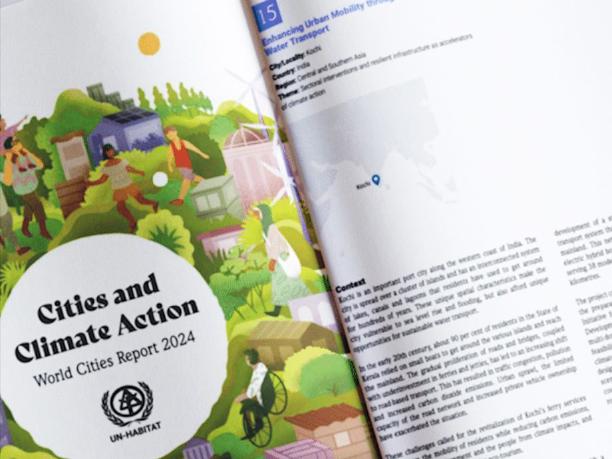
The UN-Habitat’s flagship publication, supported by the Cities Development Initiative for Asia Trust Fund, titled World Cities Report 2024, features a state-of-the-art water transport system, the Kochi Water Metro Project, as part of its Case Study Annex launched at the 12th World Urban Forum on 5 November 2024 in Cairo, Egypt.
16 December 2024
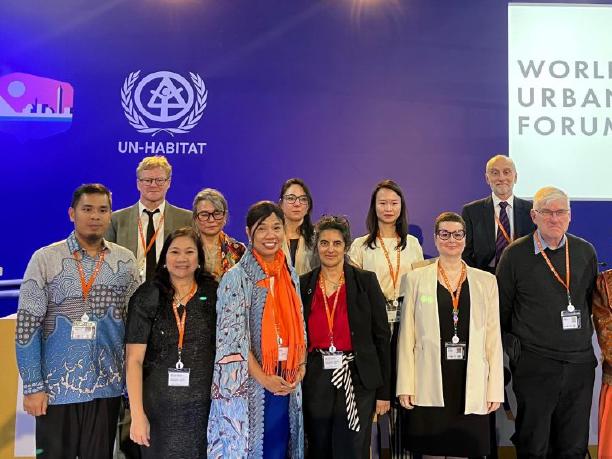
The Cities Development Initiative for Asia was part of the delegation of ADB, organizing three networking and two training events during the Twelfth Session of the World Urban Forum on 4–8 November 2024.

An article discussing ADB–Cities Development Initiative for Asia’s pivotal role in revolutionizing the urban transport system of Yereven, Armenia’s capital, by funding the project preparation study on the Yerevan Sustainable Urban Transport Implementation Project.

This article discusses how the ADB–Cities Development Initiative for Asia helped Bangladesh’s third-largest city, Khulna, prepare the second phase of the Khulna Water Supply Project, and complete its project preparation study, outlining the comprehensive water supply investment program for the city.

Enhancing housing affordability and sustainability in Bhutan, the Bhutan Green and Resilient Affordable Housing Sector Project helped finance the construction of 700 new housing units.

Greener, safer, and more efficient transport systems are key to growth in Asia and the Pacific.
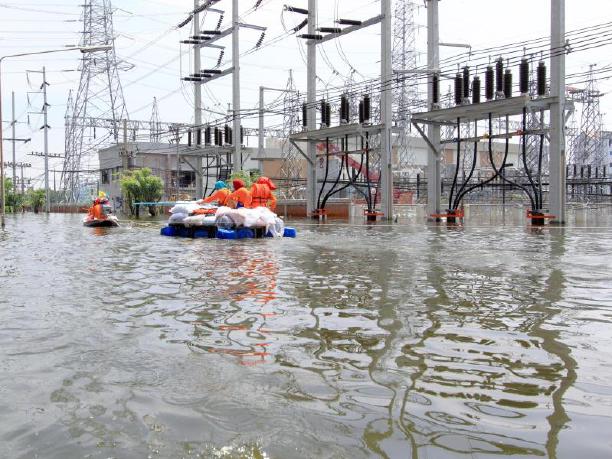
This article discusses how the Cities Development Initiative for Asia is helping the Philippine government formulate its reform agenda of mainstreaming disaster risk reduction and management at the local level.
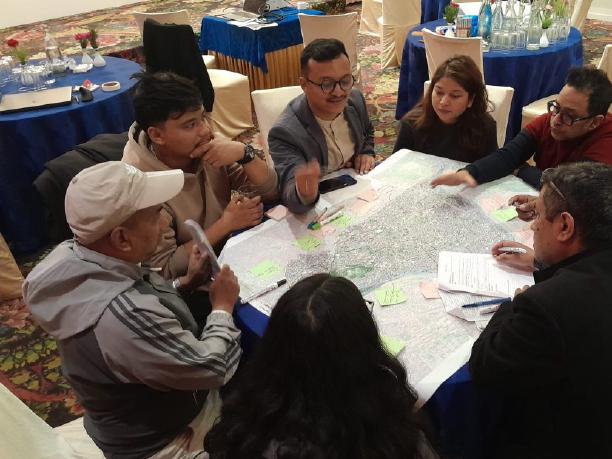
From 19 to 21 November 2024, the ADB–Cities Development Initiative for Asia conducted a series of workshops providing an opportunity for stakeholders of the Kathmandu Ecological Urban Renewal Project Preparation Study to prepare the framework of an integrated ecological transformation approach.
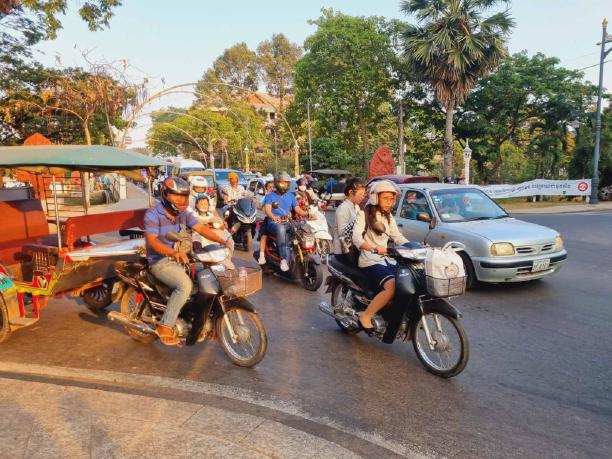
With support from the ADB–Cities Development Initiative for Asia, the Government of Cambodia is halfway through the project preparation study for the Electric Bus Fleet as Public Service in Siem Reap City, which explores the feasibility of a smart public transport system in this key tourist destination.

The Australian government, through the ASEAN Australia Smart Cities Trust Fund, helps Baguio City in the Philippines develop an early warning system aimed at increasing the city’s resilience to extreme weather and flooding brought about by climate change.
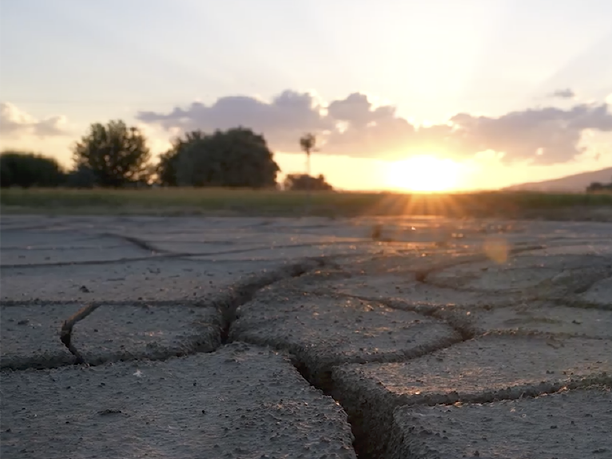
ADB contributes toward building climate resilience and addresses the shortage of affordable housing in India by facilitating loans for economically disadvantaged women to buy safe, sustainable, and affordable homes through a project supported by the Urban Climate Change Resilience Trust Fund.
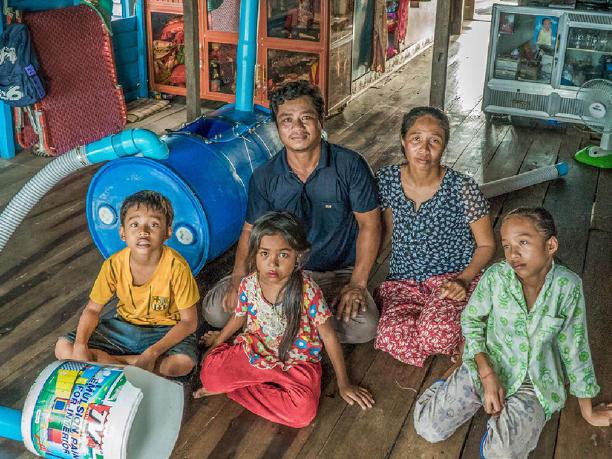
Going to the toilet is a daily challenge for people living in floating villages in Cambodia. ADB, the Bill & Melinda Gates Foundation, and Japan are helping to bring better water supply and sanitation facilities to these villages and improve people’s health in rural Cambodia.

ADB worked with Nepal following the 7.8 magnitude earthquake on 25 April 2015 and the devastating aftershock on 12 May 2015 that cost 9,000 lives and destroyed thousands of structures in Kathmandu and nearby towns.
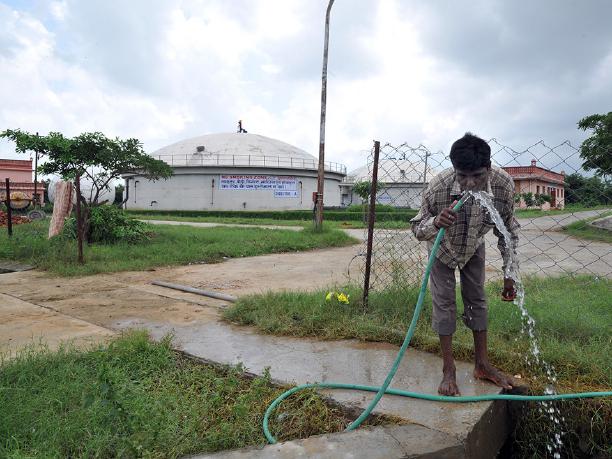
The Rajasthan Urban Sector Development Program, a partnership among ADB, the Sanitation Financing Partnership Trust Fund supported by the Bill & Melinda Gates Foundation, and the Government of India, showed that physical investments that uplift the lives of the urban poor are better planned when they are combined with policy actions that strengthen institutions overseeing infrastructure and planning.

This video introduces Growing Resilience and Ensuring Equality in Nusantara (GREEN), a URTF-supported project that aims to help the poor, vulnerable communities, women, and farmers groups in Indonesia’s new capital city, Nusantara, to become more resilient to climate change impacts.
The Urban Financing Partnership Facility is dedicated to mitigating climate change and disaster risks for select cities in Asia and the Pacific.
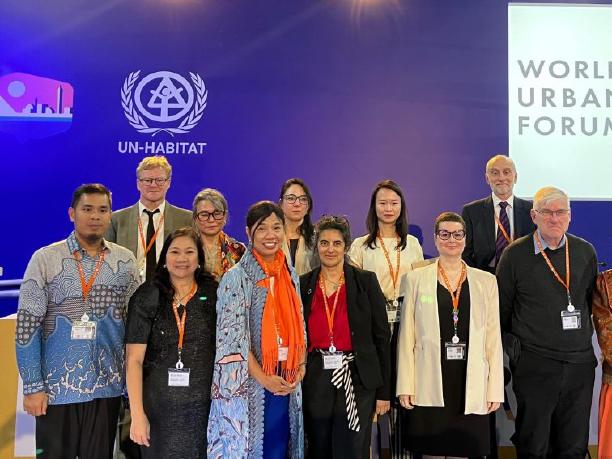
The 12th Session of the World Urban Forum with the theme “It All Starts at Home: Local Actions for Sustainable Cities and Communities," brought together a record number of 25,000 participants from 182 countries.
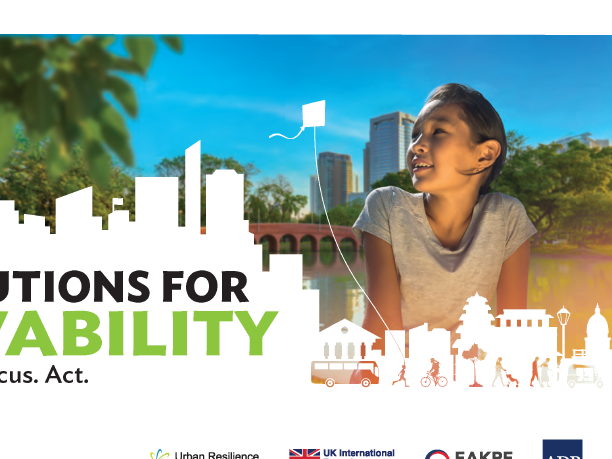
A brochure detailing how Solutions for Livability addresses urban development challenges via an integrated, focused, and rapid approach that leverages local knowledge and international best practices and experiences.

The Workshop on Strengthening Solid Waste Management Practices and Transitioning to a Circular Economy is a gathering of global experts and solid waste management (SWM) practitioners from across Asia and the Pacific intended to provide a global overview of SWM, share international best practices and strengthen capacities among DMCs.
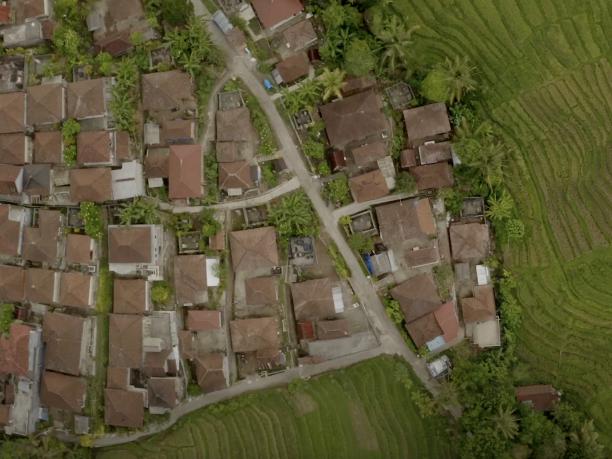
A video explaining the concept of urban resilience and its crucial role in the creation of sustainable and adaptive cities, especially in highly vulnerable countries like Indonesia.